Wieder nach Deutschland

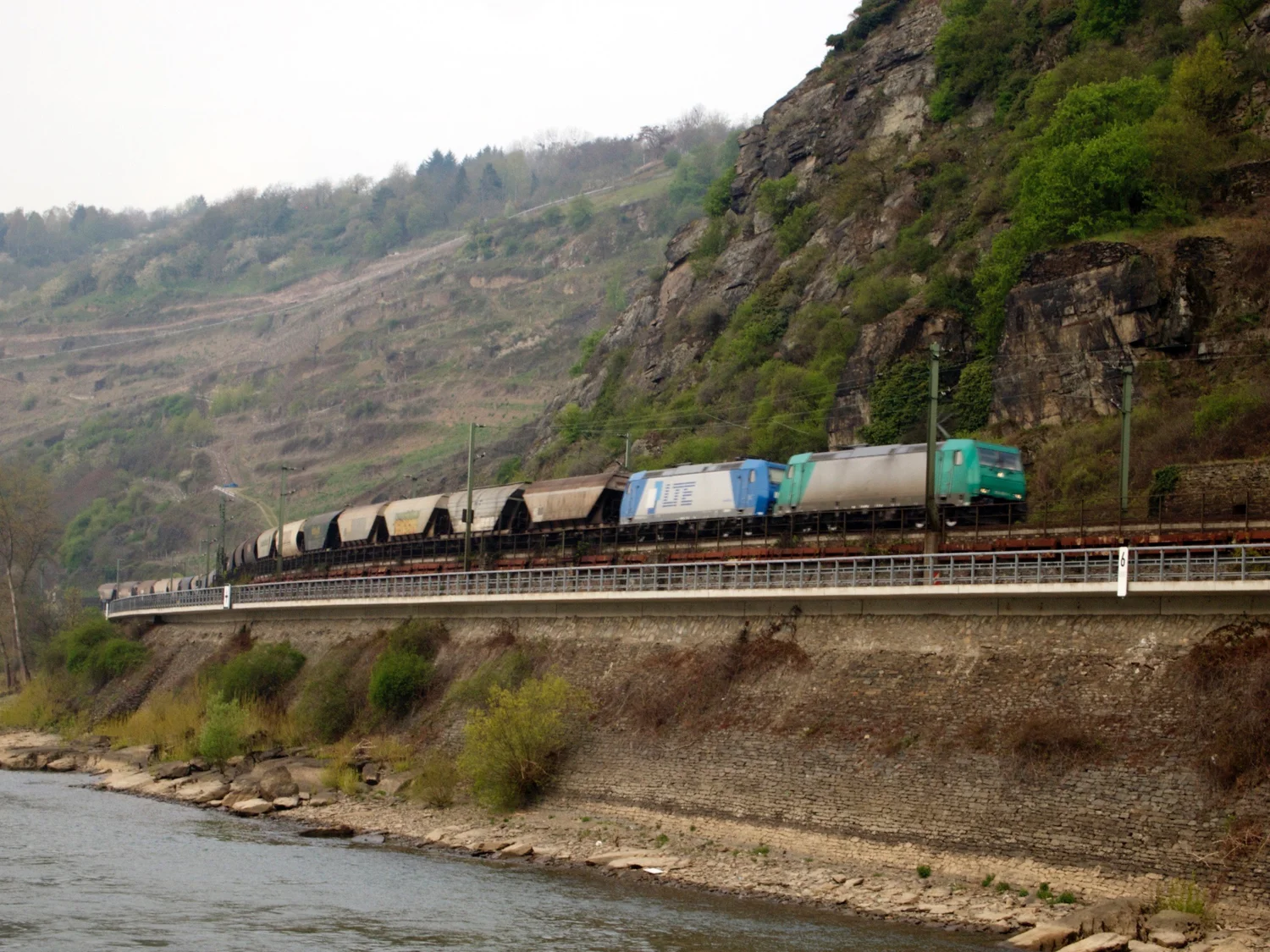
This morning at 4 am we released from our mooring site in Strasbourg and headed back to the German part of the Rhine.

And yes, that means we were up at 3:30 am.  Practice for my 3:00 am interview on Thursday morning for practicum.  I am hoping to do well and impress, even if it is an ungodly hour for humanity.

We were in classes this morning with Wally Cherwinski (video) and Josimar King (Tell Me a Story), where we got to learn a few new things.  The new Final Cut Pro X really looks like software in which we will invest when we get our new MacBook Airs.  Seems as though I’m going to have an Air to donate within the family some time in the not too distant future.

While we were in Wally’s class, we were passing through a very narrow lock, and we felt bumping and scraping on the boat.  Turns out that we were clearing on the starboard side, but the port side was not faring quite as well as there was not another pair of eyes there.  According to Chris Marquardt, one of our lecturers, the captain said (in a thick Bulgarian accent), “Not good.”  And that was it.  Not one for words, and not one who was happy.

We wound up delayed getting into Breisach, a city halfway between Colmar, France, and the Black Forest.  The city itself used to be in the middle of the Rhine after a flood until an engineer named Johann Gottfried straightened the Rhine.  The city was almost entirely destroyed by the Allies as they crossed the Rhine during WWII, but has largely been reconstructed.  Its main industry is wine, which is of the white Alsatian variety.

Anyway, we were delayed by two other ships in front of us, so our buses had to come and get us about 20 km outside the city.  We then went into Breisach and picked up our guide.  By the end of the day, I wished we had left her there!!!  Especially when she started talking politics, and the French ruling prohibiting burkas in public -- “we are saving these women!”  “No one forces these Muslims to go to public school, even though there are no Muslim religious schools here...” and so on.

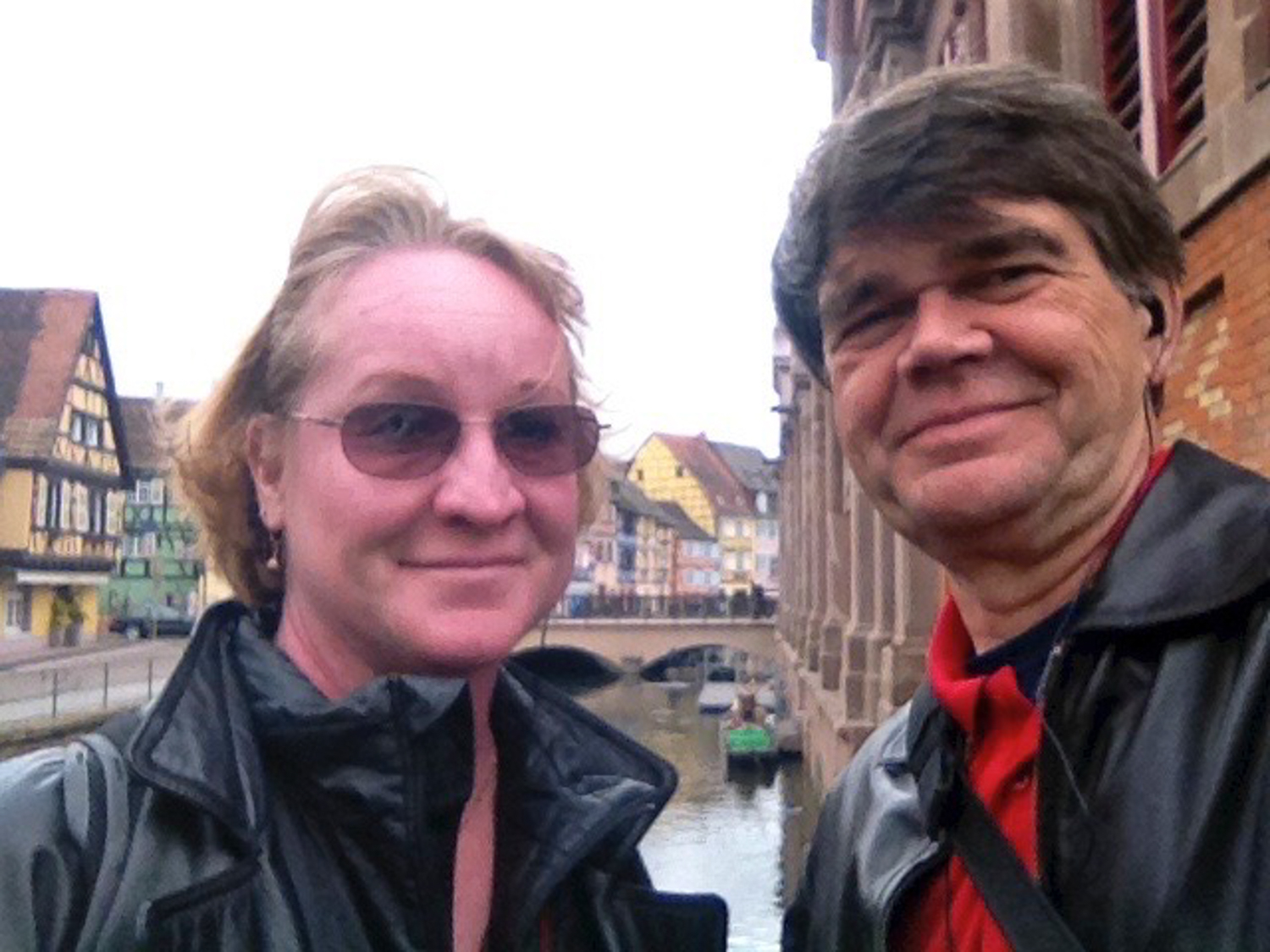
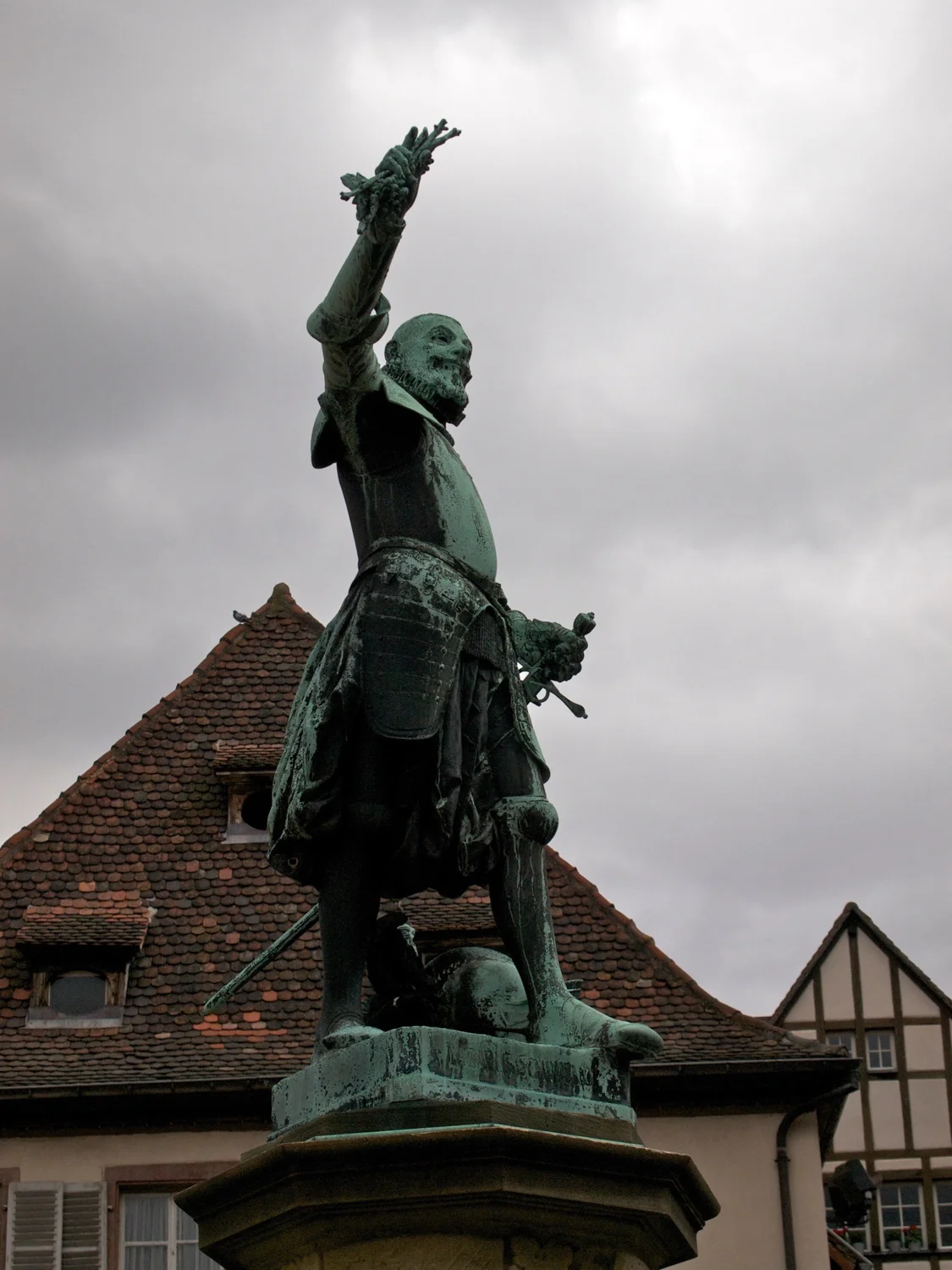
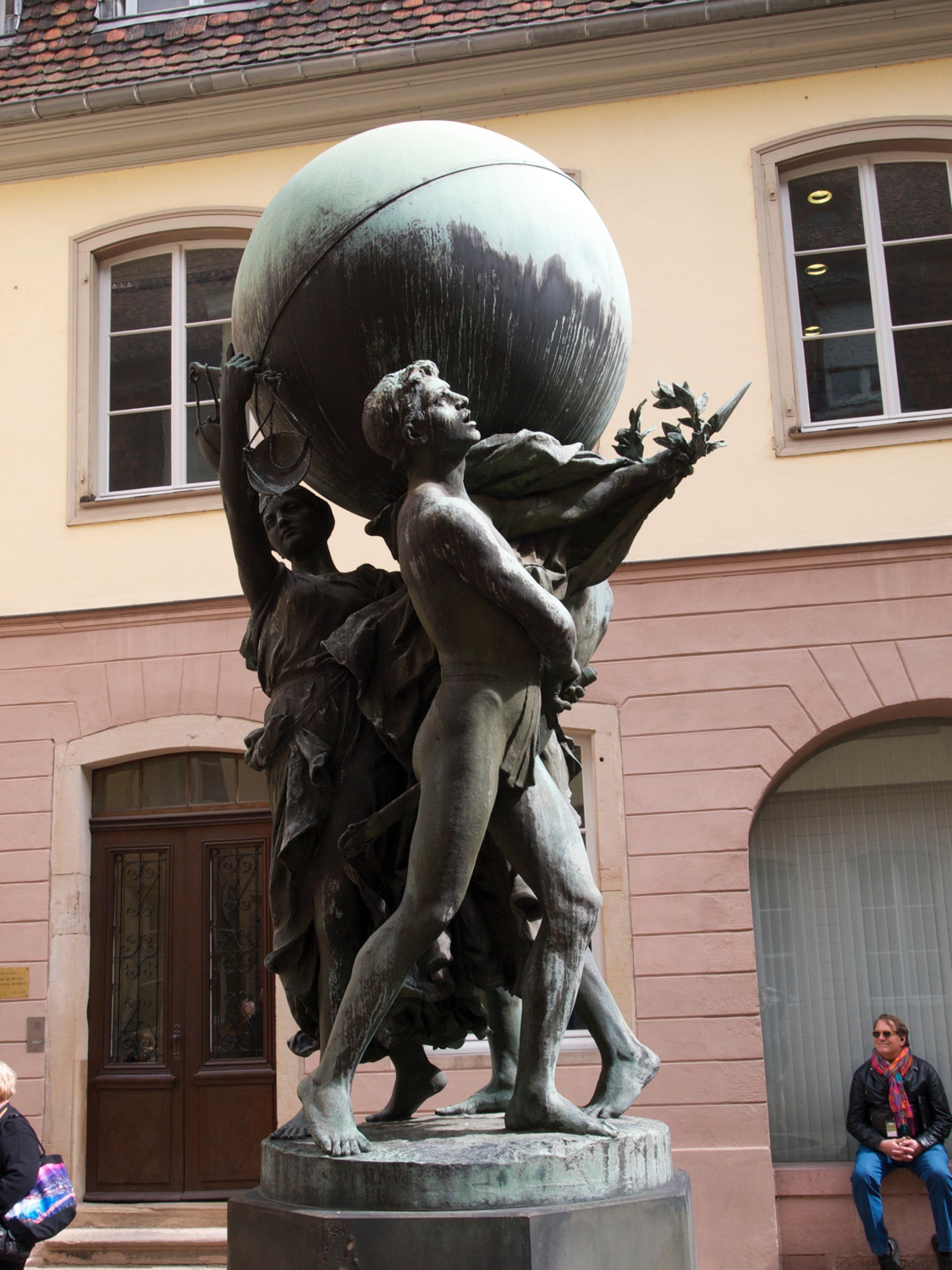
We went to Colmar, which is on the Alsatian Wine Route, and is considered the capital of Alsatian wine by its inhabitants.  The city itself is filled with the beautifully colored houses and traditional German architecture styles.  There are many cobblestone streets, and many pedestrian walkways.  The churches have galleries (since we were late, we were not able to go in to any of them, or do any shopping =p) with some spectacular paintings, so we were told.  We went through la Petite Venise (little Venice), and visited the outside of the home of Frederic Bartholdi, the sculptor who designed the Statue of Liberty.  His bronze pieces decorate the city, and are lovely.                       

From our abbreviated Colmar trip, we went to the winery Wunsch et Mann (last names, a 3 generation wine making family, with the 4th generation “in the making”) to taste wine.  We had a Petit Blanc, Riesling, and a Gewurztraminer.  All were nice, but nothing to write home about.  The vintner then brought out a bottle of his sparkling, which tasted like a fizzy candy apple.

From there, it was home to the ship for our last night.  We were treated to a farewell cocktail by the Captain, and then had a Chaine de Rotisseurs dinner - oh my goodness.  I had a vol au vent (turkey), some of Wayne’s cream of escargot soup (c’est formidable!), and lamb shank for dinner.  We were treated to a nice Alsatian burgundy (only 10% of the wines are red here).  La Confrérie de la Chaîne des Rôtisseurs is an international gastronomic society founded in Paris in 1950. The Chaîne is based on the traditions and practices of the old French royal guild of goose roaster, whose authority gradually expanded to the roasting of all poultry, meat and game. It is dedicated to fine cuisine and promoting and developing the gastronomic values while at the same time widening its focus to table art.  For over four centuries, the brotherhood of the Roasters cultivated and developed culinary art and high standards of professionalism and quality—standards befitting the splendor of the "Royal Table"—until the guild system was disbanded, together with all others, in 1793 during the French Revolution. The Rôtisseurs were almost forgotten until 1950 when Dr. Auguste Becart, Jean Valby and “Prince” Curnonsky, and chefs Louis Giraudon and Marcel Dorin resurrected the Society and created La Confrérie de la Chaîne des Rôtisseurs. Since its rebirth, the society has grown dramatically, spreading its influence and presence worldwide. Today, the Chaîne brings together professional and non-professional members from around the world who share in the "spirit" of the Society and who appreciate and enjoy wine and fine dining.

We had dinner with Sue, Ivan, Josimar and Marcia, and we are planning on some future travel with Ivan and Sue outside of MacMania.  At the very least, we are hoping we have them in Hawaii for the week prior to their next cruise, which is in Australia.  If it weren’t during a bad time of the school year, I’d wish to be with them on that, but we will already be traveling to London for Dad’s birthday and San Francisco for the AACAP conference.  Have to stay home for my last year of school at some point!!!

At the end of the dinner, we spoke with the CEO of InSight Cruises, who was really very considerate of and concerned with our displeasures.  In addition to taking in and executing on the majority of our recommendations, we were offered 25% off our next seminar, which, I’m happy to say, will be a trip down the Rhone River, starting in Lyon, and winding up in Barcelona in December 2013. 

All in all, I have to say I have really enjoyed river cruising, as has Wayne.  The ship is much smaller, only 140 passengers, and the atmosphere very intimate.  Dad would have to watch his head entering doorways, but for the most part it wasn’t too bad.  Ivan, at 6’4”, didn’t have that much difficulty in getting around.  The ports of call were nice, the food and crew were absolutely fantastic, and it was good to be with friends.  That will be the hardest part about leaving tomorrow, disappearing to the four corners of the world and hoping to meet up again in 2013.

And now it is time to try to register for fall classes, and get in enough sleep to take part in a 5:30 am conference call.  Good practice for the 3:00 am on Friday!

Schlafen gut, alle.
Ooh la la, Strasbourg

This morning we awoke at 4:30 to find ourselves docked in Strasbourg.  It was bitterly cold, but there were swans swimming around the AmaCello, and frost on the upper deck.  Mind you, it wasn’t nearly as cold as Heidelberg, but it was indeed cold.

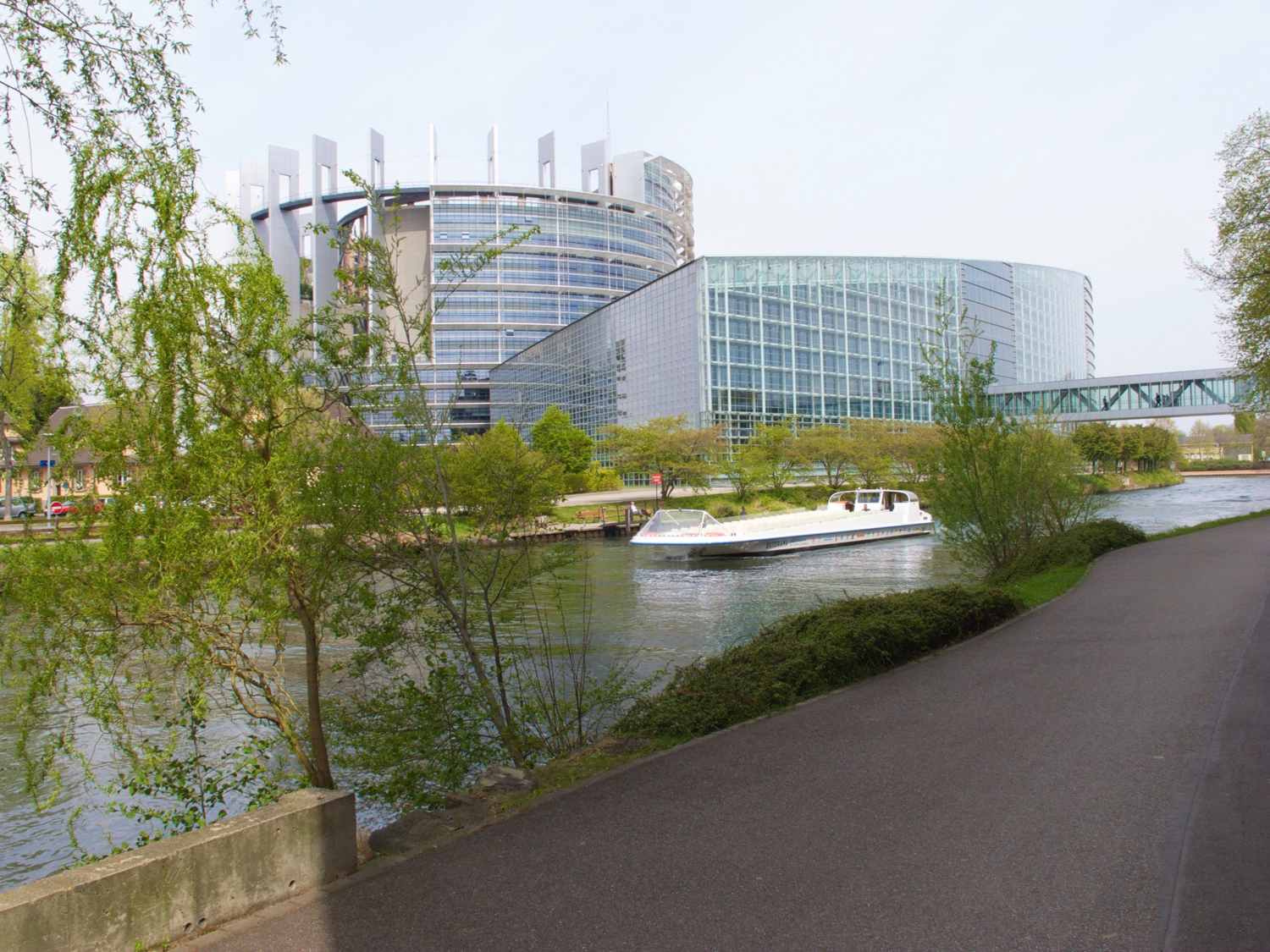
Strasbourg is the capital and principal city of Alsace, and is the seat of several European institutions.  These include the European Court of Human Rights, the European Directorate for the Quality of Medicines, the European Audiovisual Observatory, the Eurocorps, the European Union Parliament, and the European Ombudsman of the European Union.  The city is an iprtant center of manufacturing and engineering, as well as road, rail, and river communications.  I believe this last part greatly, as the GPS on the iPhone reset today to actually reflect where we were!!!  It had us in the Netherlands for the majority of this past week.

The city center, also known as the Grande Ile, was classified as a UNESCO World Heritage site in 1988.  The possession of this city has fluctuated back and forth between France and Germany (four times in 75 years, although it has been French since the end of WWII) for centuries, which is reflected in its culture, the meals, and the street signs.  There is also a small minority in the country that speak Alsatian language, but the official language is French - despite passing several bilingual schools on our canal ride.

One of the most unpleasant memories for Strasbourg is that of Little France (Petit France), where the soldiers who contracted syphilis were sent to either be cured or die.  They tended to be left there, and forgotten, living in their little piece of France during their ending days.

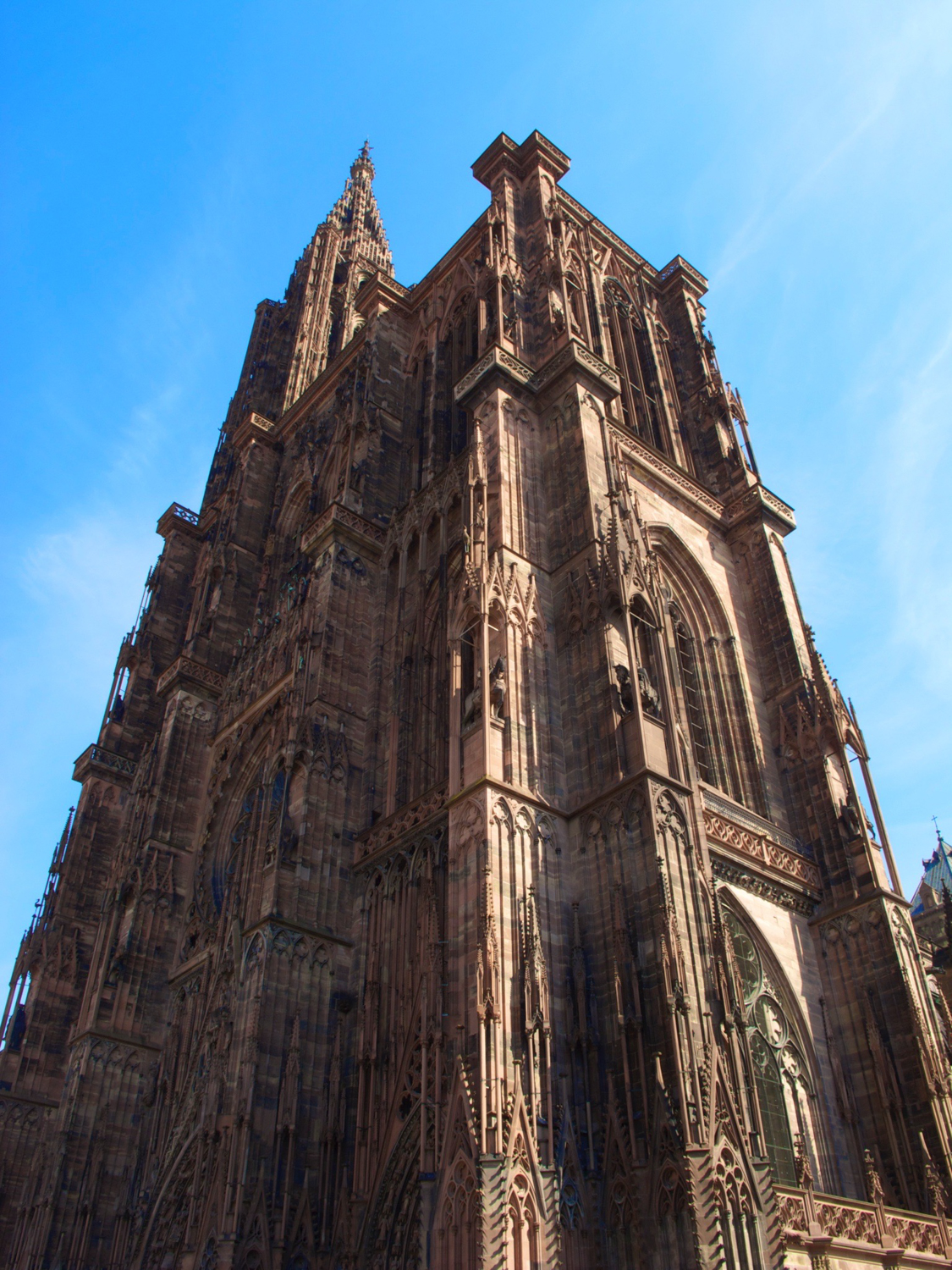
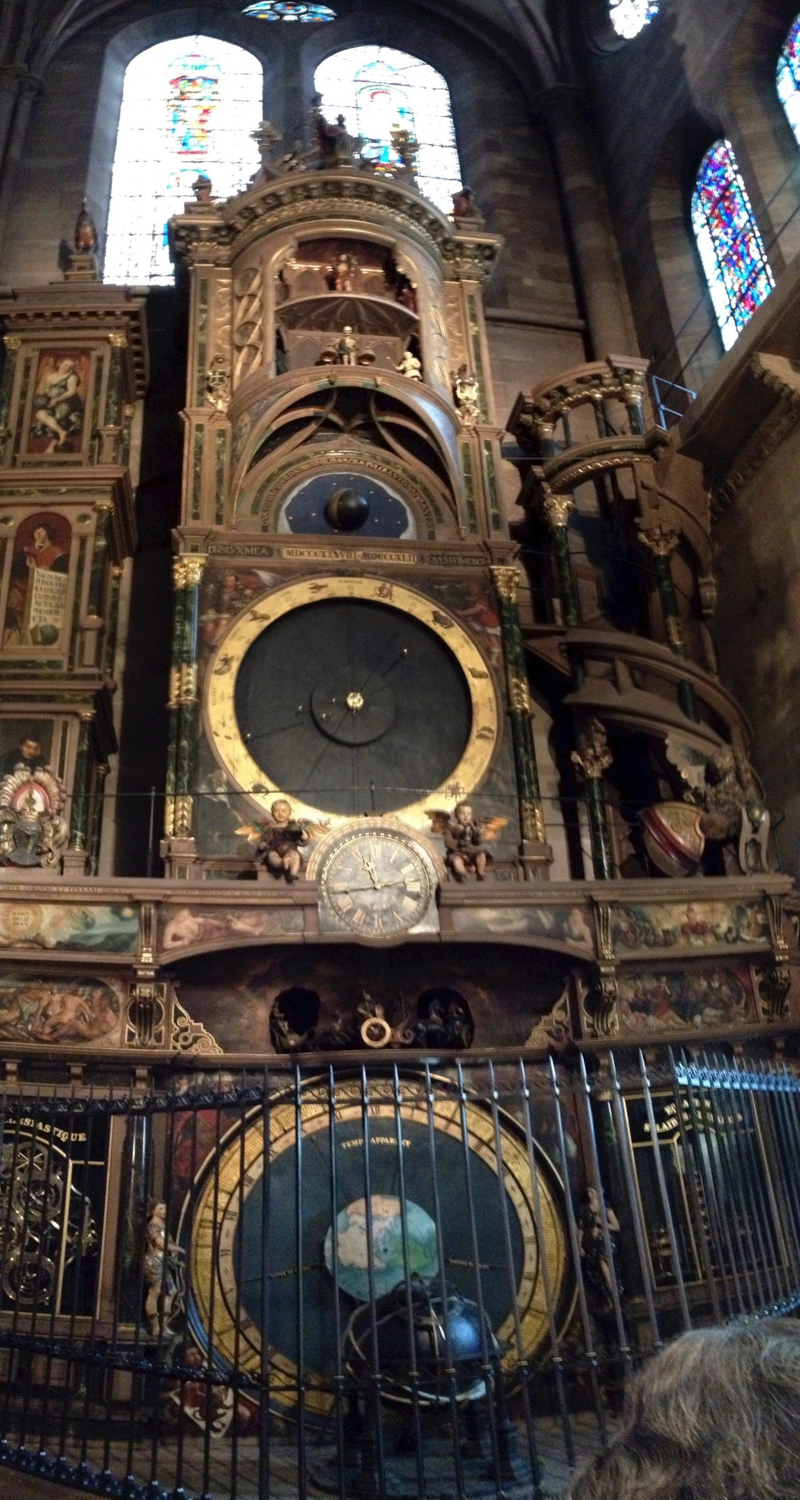
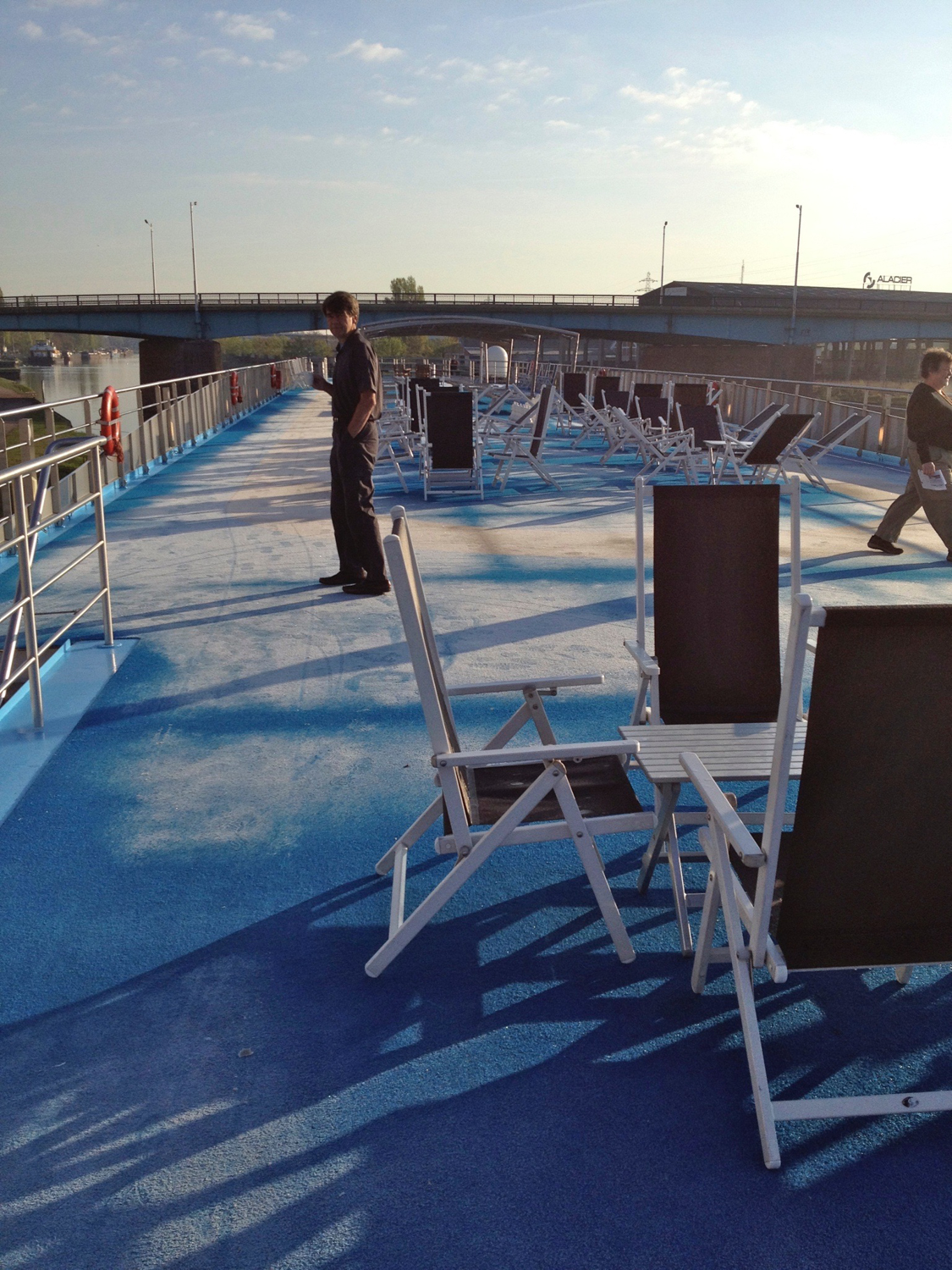
Wayne and  I spent a little time on deck this morning, although we had to tread lightly, as there was a significant layer of frost.  That being said, it was not as bitterly cold as Heidelberg.  After breakfast, we went into town and had a canal ride (my third in my lifetime), and then visited the Notre Dame of Strasbourg (my fifth time), and the astronomical clock.  Following that, we walked around the shops of the city (all the big names) and saw a few more sights.  Lunch was baguette sandwiches at a local cafe with Ivan and Sue, and then we headed our separate ways.  They shopped, we walked back to the boat through a central residential area surrounding the Orange place, which was filled with greenhouses.  We did a little more walking (9 miles in total for me today) after returning to the AmaCello, ton include a visit to a local pub that had free high-speed wifi, but abandoned thoughts of bicycling, as it was still cold and windy.  And dry.  That’s the one thing I do not miss about Europe, the dry winters that crack your skin if you are not careful.

One amusing thing the guide told us, crosswalks in France are merely for decoration, drivers do not care to follow the rules!

Dinner was the gala farewell (although we don’t leave for another 2 days), after which I received notice of my practicum interview, which will be Friday morning, 3 am Switzerland time.  Luckily our flight doesn’t leave until 2 pm Friday, so I will get a little more rest before flying for over 15 hours.

Bonne nuit, tout le monde!

Yes Virginia, you can go home again

Happy birthday, Grandma.  We miss you.

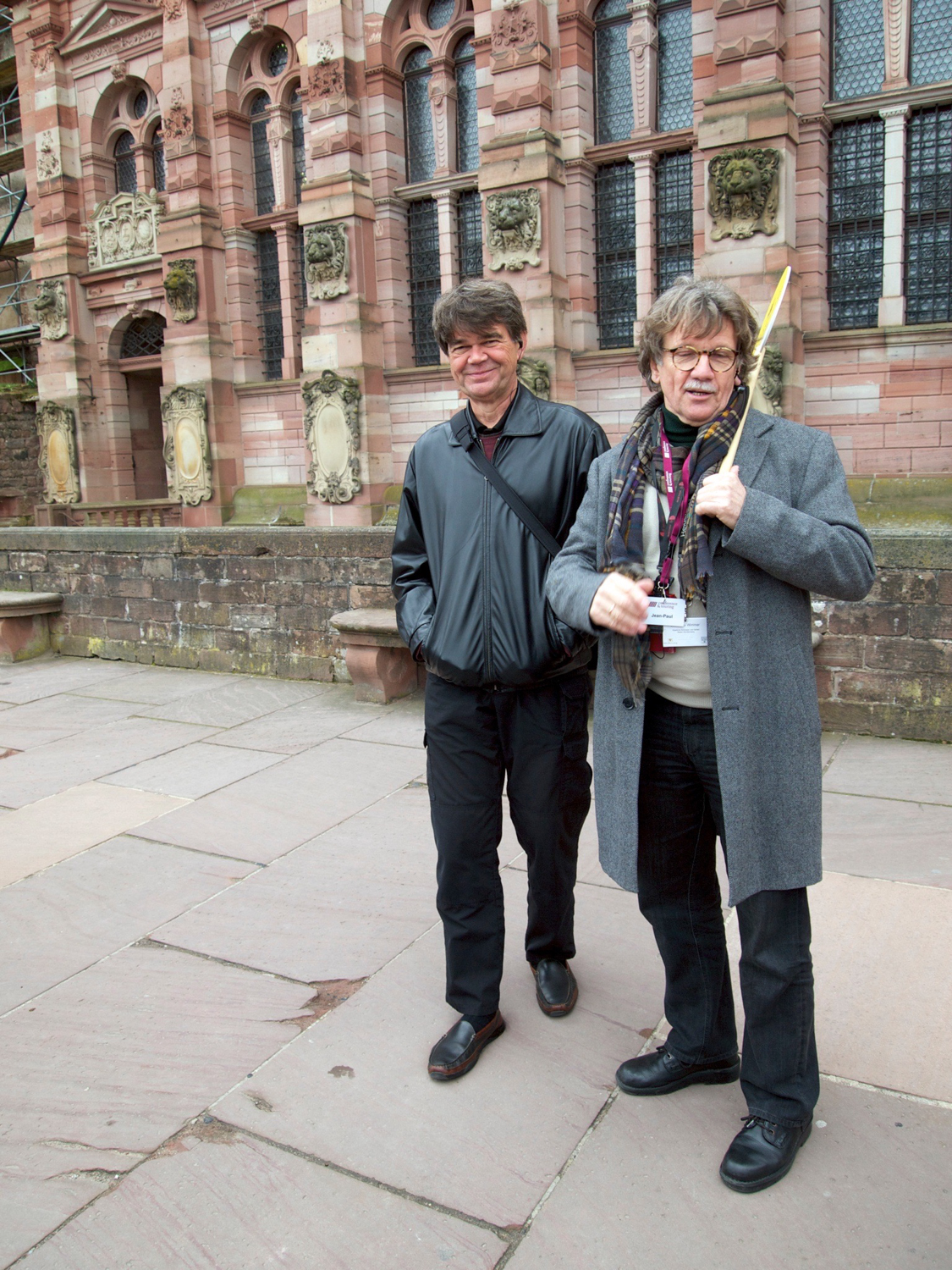
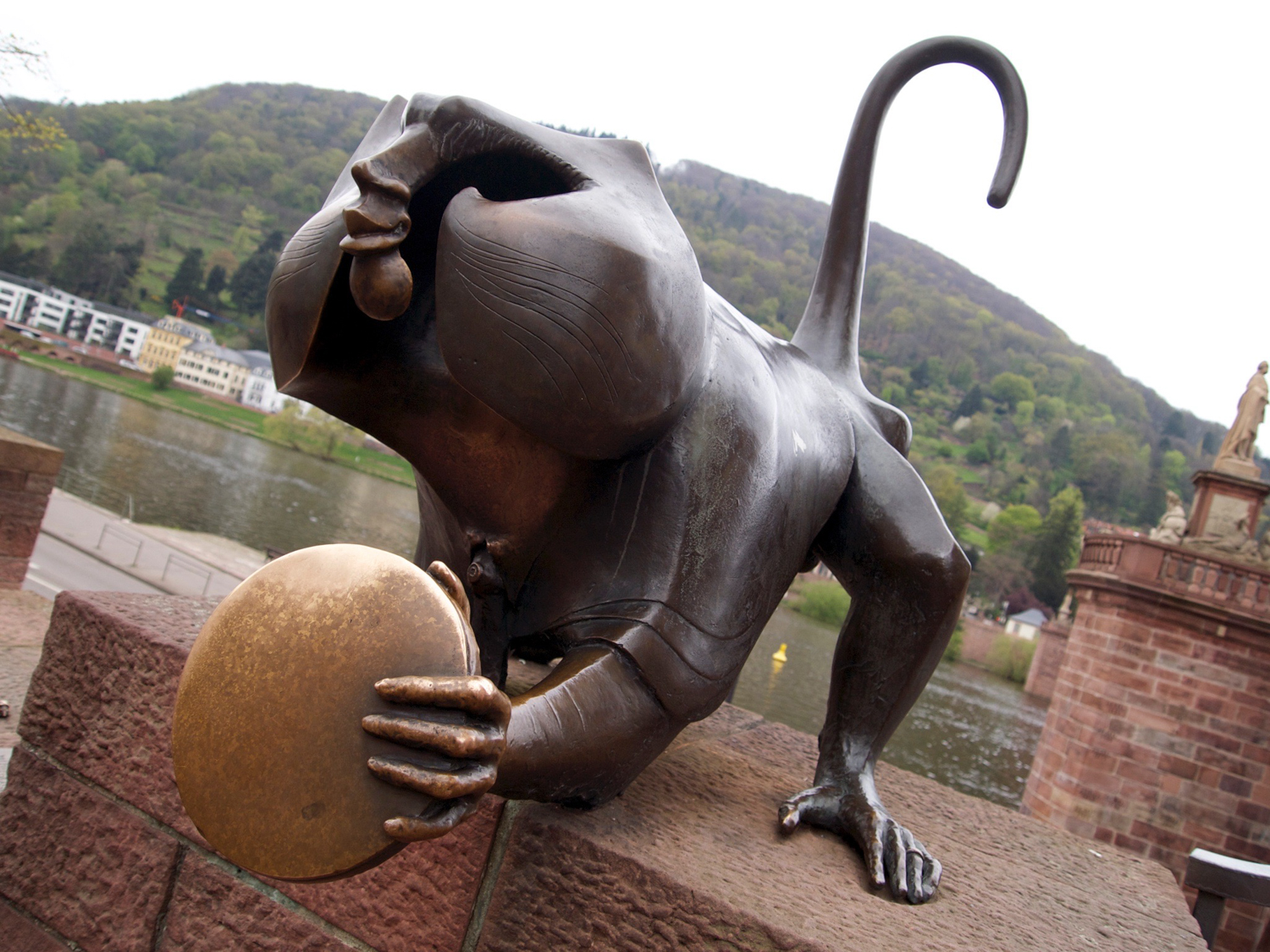
This morning we docked around the 6 am hour in Mannheim.  We breakfasted early, picked up our boarding cards, and got ready for the trip to Heidelberg, one of my old stomping grounds.  We were headed to the center of the old city for sight seeing and shopping.  The air was bitterly cold, and I was extremely glad for the hat I had in my pocket, thank you Maria!  Our tour guide was French, and he made interesting and fun conversation about the history of Heidelberg, particularly from a French slant.  Loved it!

Heidelberg is The fifth-largest city in the state of Baden Wurrtemberg, Heidelberg is part of the Rhine-Neckar metropolitan region, with over 145,000 people in the city. It is bordered by the Neckar river in Odenwald (Oden forest).

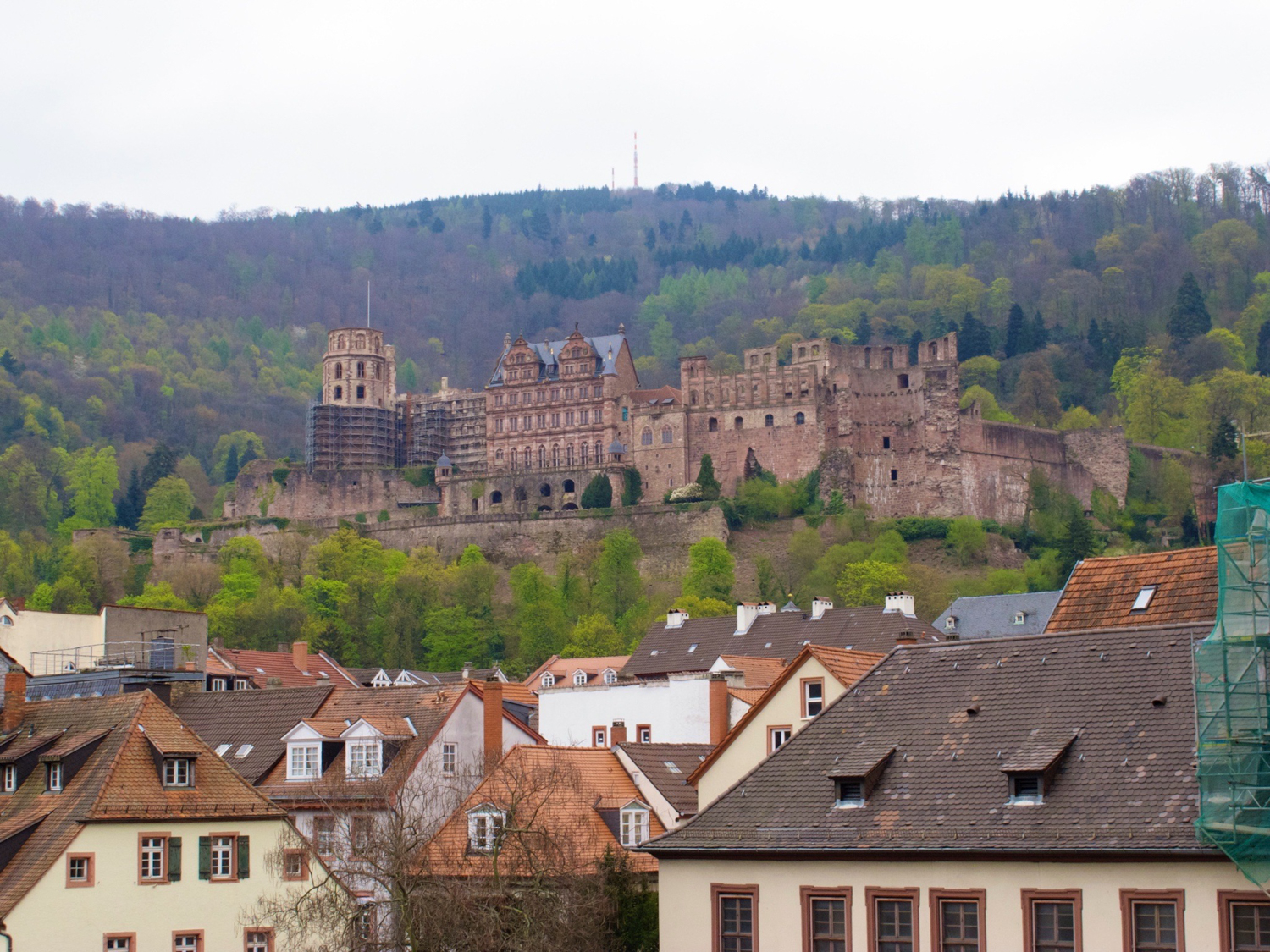
Heidelberg is the location of the well known Unviersity of Heidelberg, with many students coming from outside the city, as well as the country.  The city is dominated by the ruins of its extensive castle, and is filled with Baroque architecture, which is visually very pleasing, and as mentioned before, is renowned for for its state university, the oldest in Germany.  Originally free to Germans and foreign students, there is now a cost of approximately 500 Euros per semester.  This includes graduate and medical students!  The university ws founded in 1386, and was the fourth university established in the Holy Roman Empire -- and it’s been co-ed since 1899!

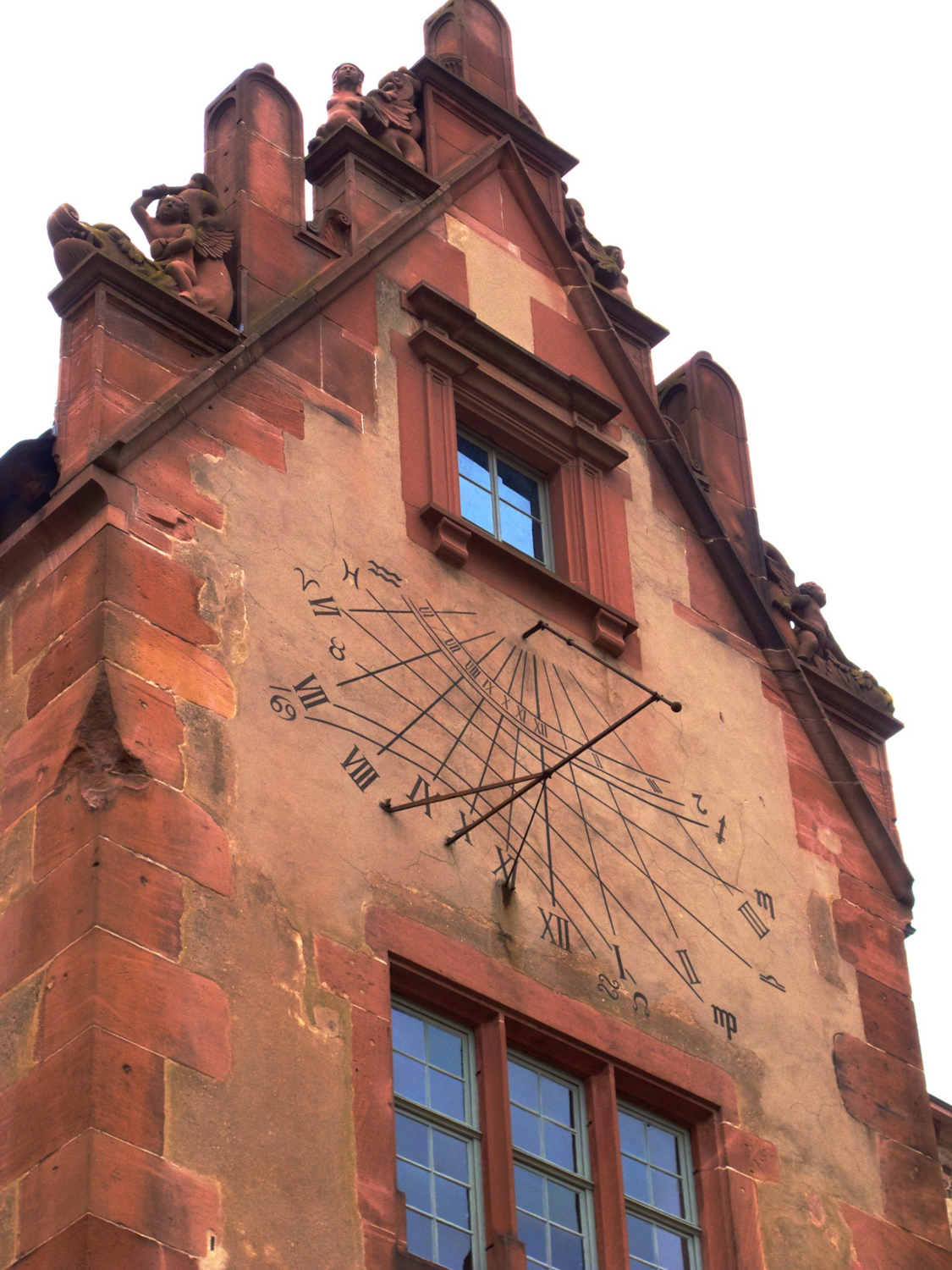
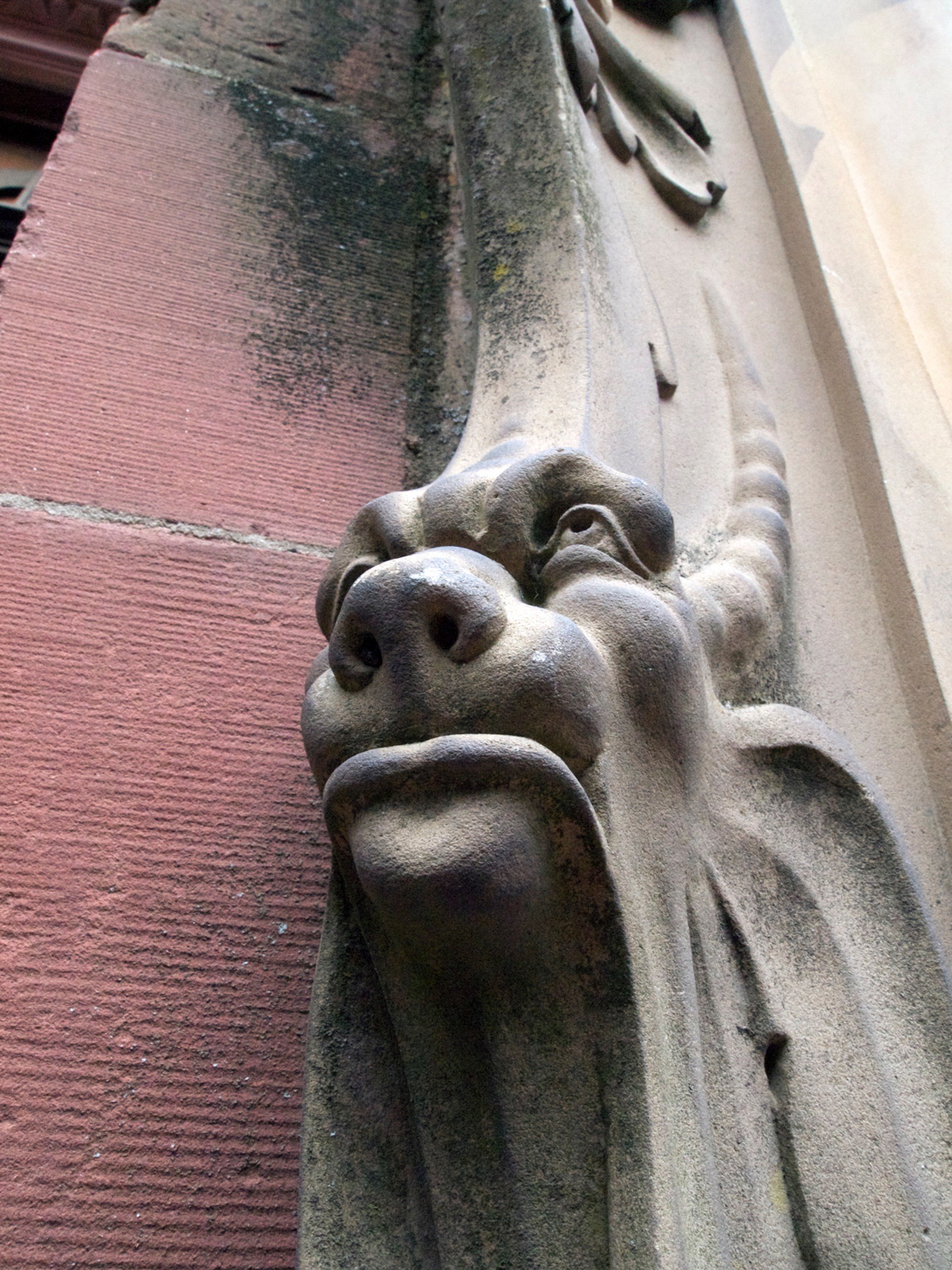
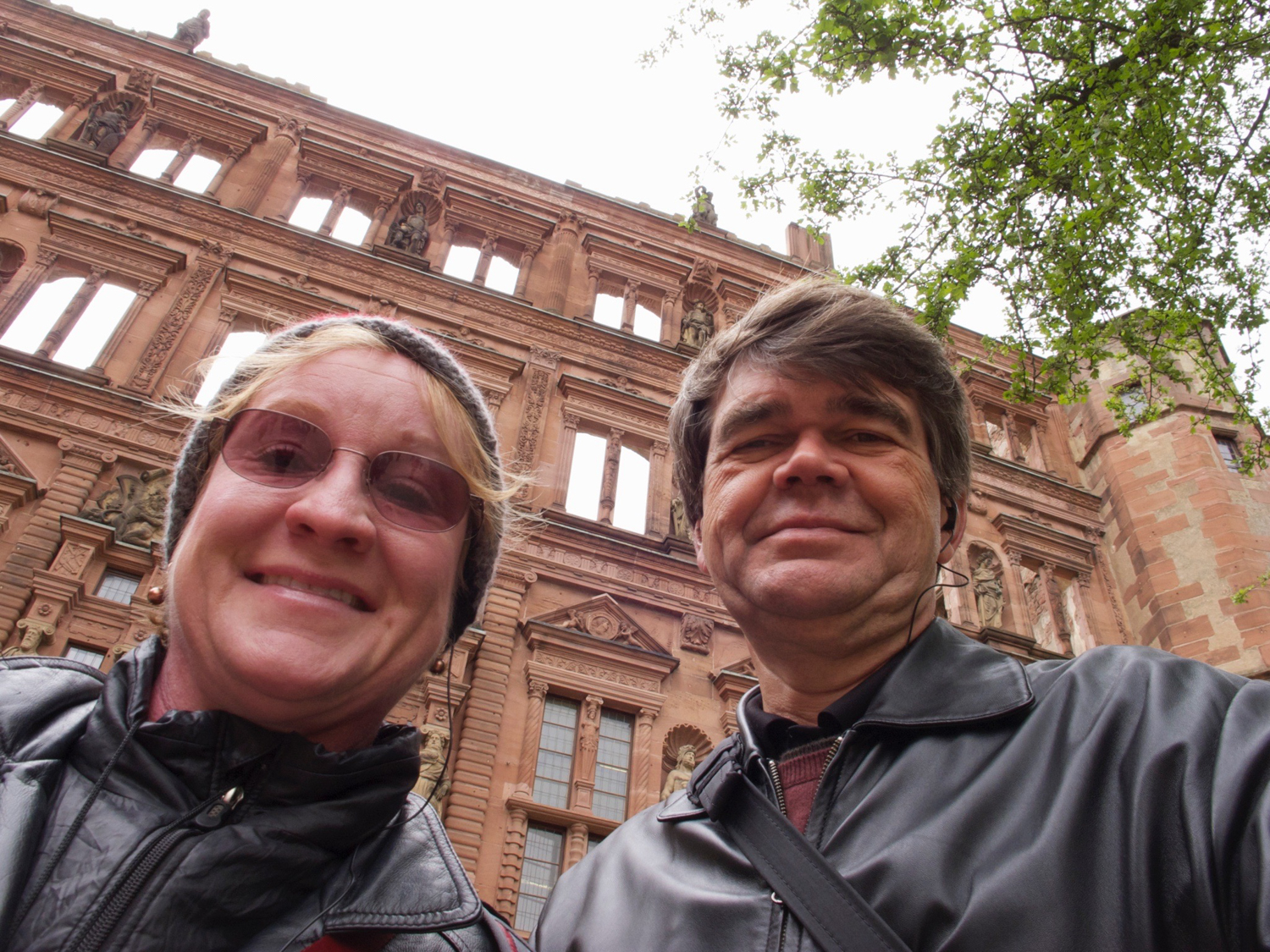
The castle is a mix of styles from Gothic to Renaissance. Prince Elector Ruprecht III erected the first building in the inner courtyard as a royal residence. The building was divided into a ground floor made of stone and framework upper levels. Another royal building is located opposite the Ruprecht Building: the Fountain Hall. Prince Elector Philipp is said to have arranged the transfer of the hall's columns from a decayed palace of  Charlemagne from Ingelheim to Heidelberg.

In the 16th and 17th centuries, the Prince Electors added two palace buildings and turned the fortress into a castle. The two dominant buildings at the eastern and northern side of the courtyard were erected during the rule of Ottheinrich and Friedrich IV. Under Friedrich V, the main building of the west side was erected, the so called "English Building".

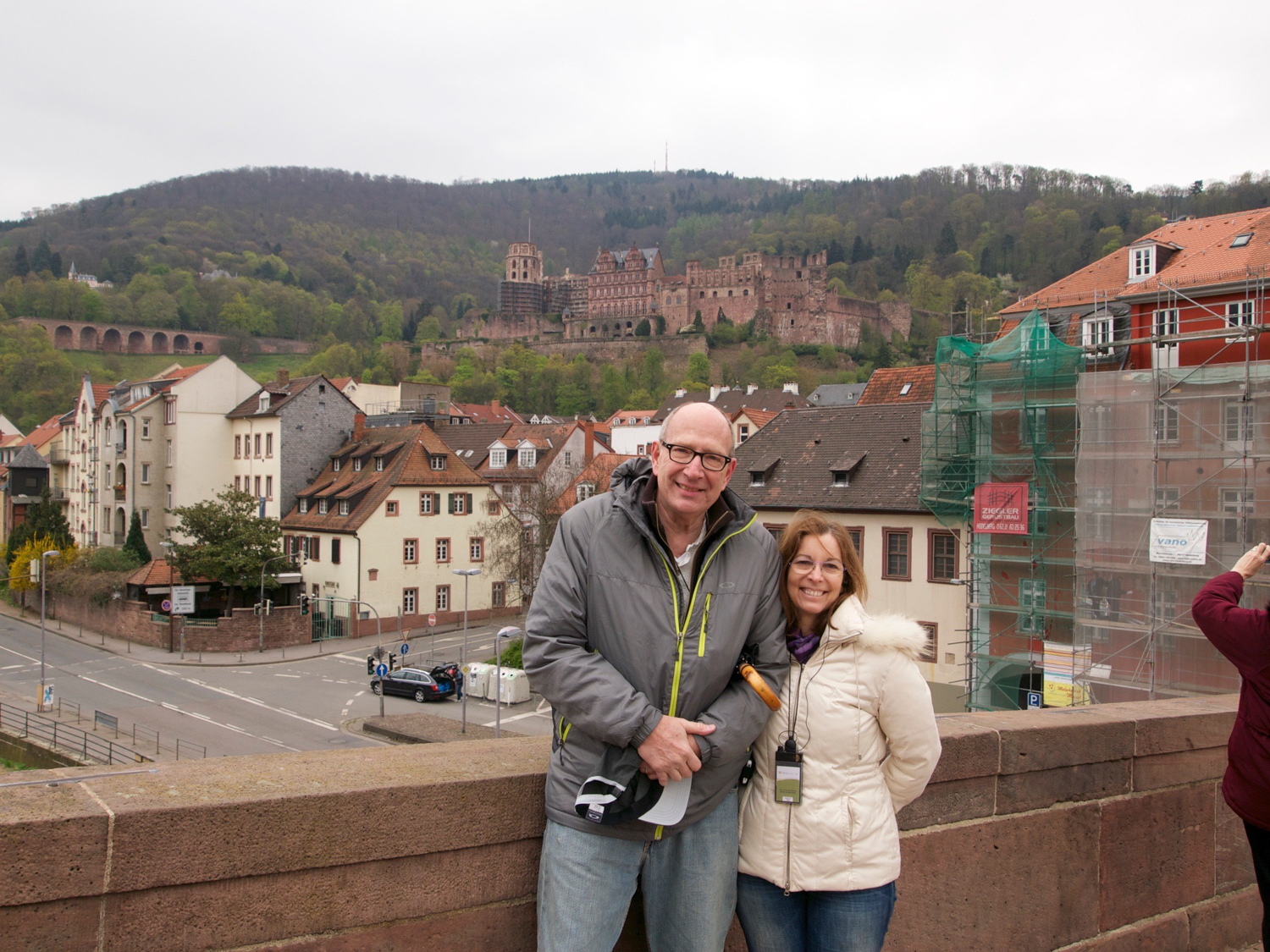
The castle and its garden were destroyed several times during the 30 Years’ War and the Palatine War of Succession. As Prince Elector Karl Theodor tried to restore the castle, lightning struck in 1764, and ended all attempts at rebuilding. Later on, the castle was misused as a quarry; castle stones were taken to build new houses in Heidelberg. This was stopped in 1800 by Count Charles de Graimberg, who then began the preservation of the Heidelberg Castle.

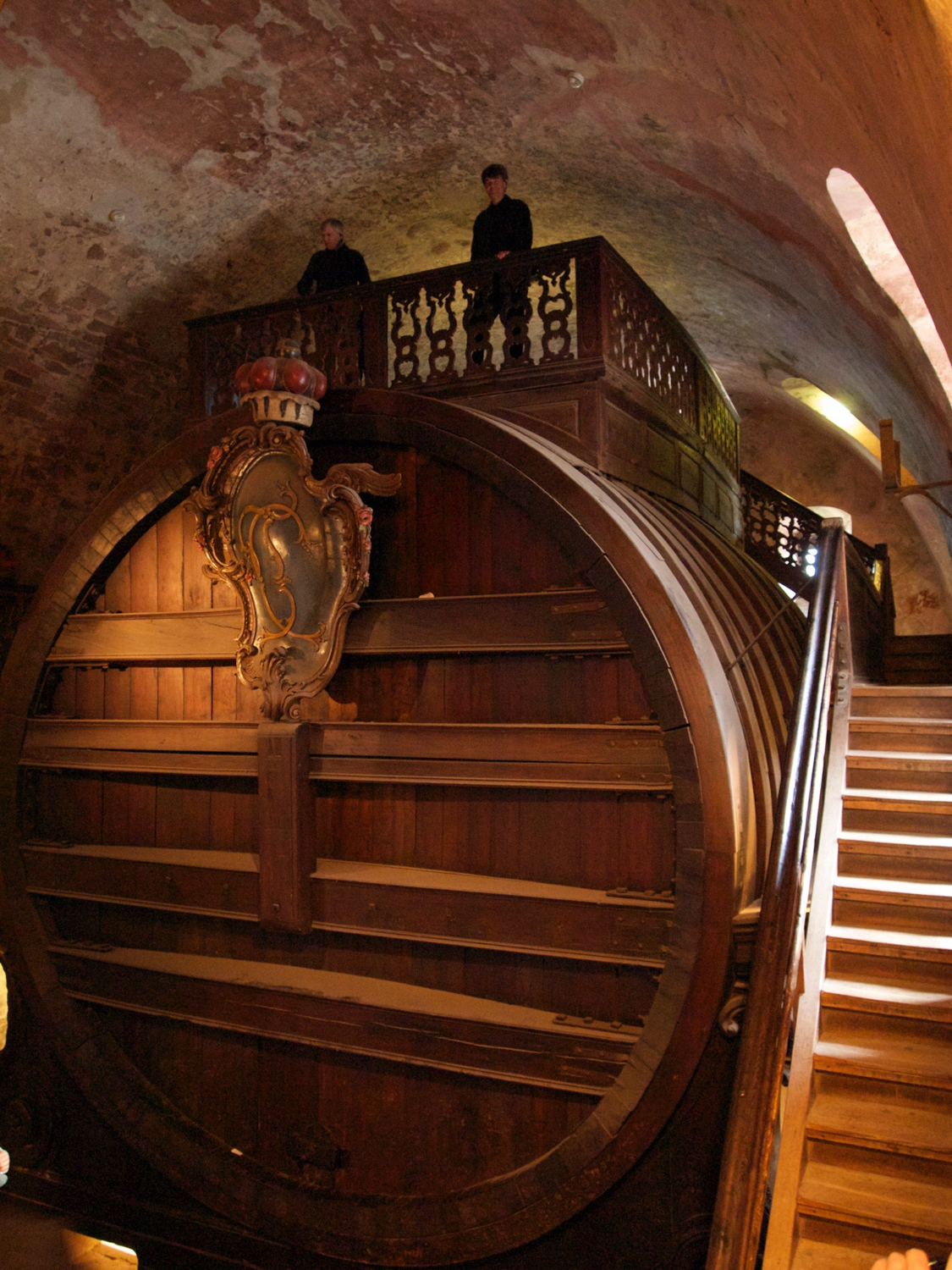
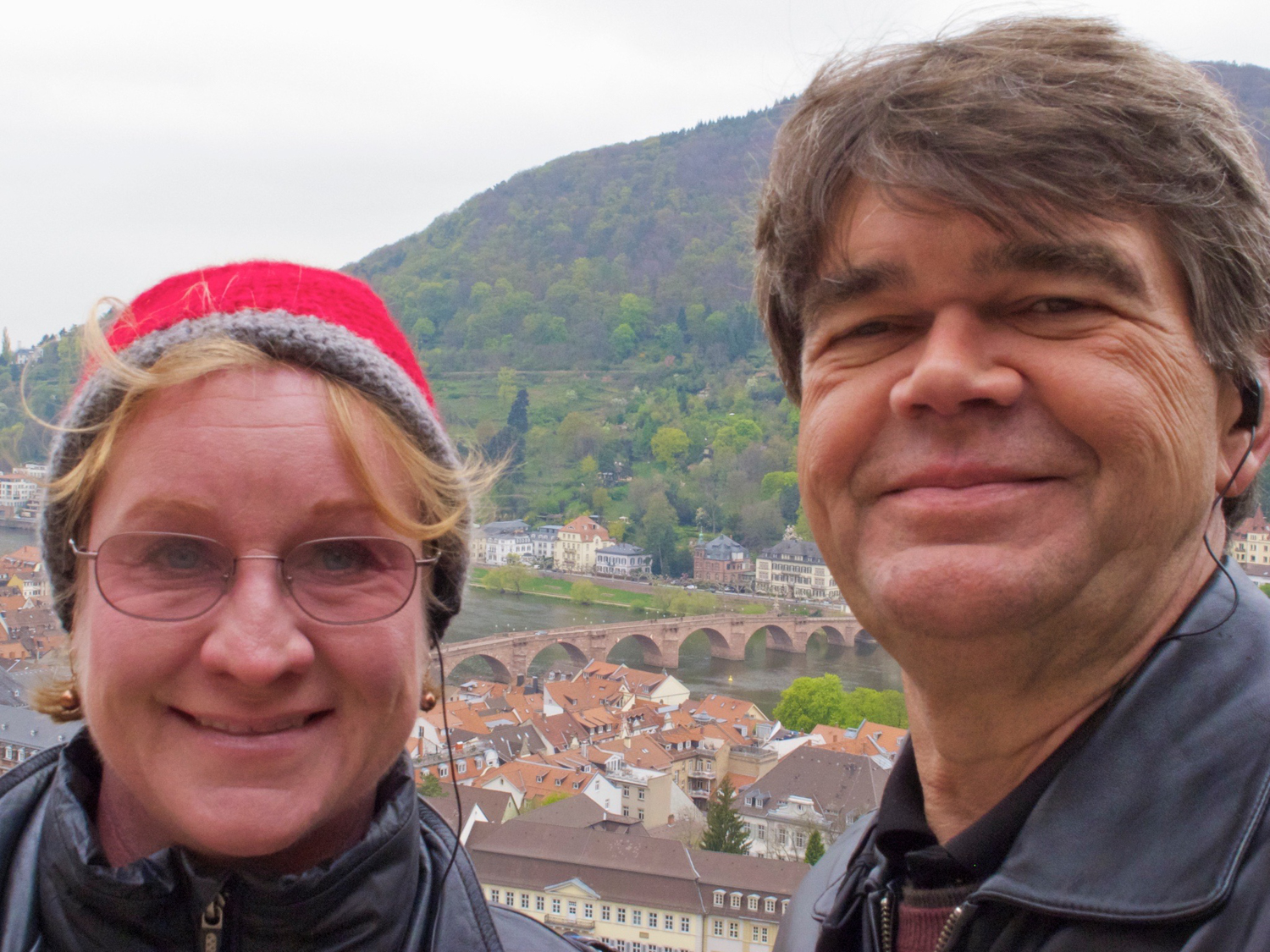
There’s a new visitor’s center (new since my last trip here in 1999) at the entry to the castle, and you can no longer go down into the main courtyard to see the wells and the cannons, but it was still beautiful.  The weather was bitterly cold, so I was extremely grateful for the hat Maria had made during our time in San Diego in January.  It has been used several times!  We made our way through the main square in the castle, and then went down into the wine storage cellar, where we got to see the enormous wine cask.

We went on the Hauptstrasse after taking a walk on the Alte Brucke, the old bridge.  It is the oldest entryway across the Neckar River into Heidelberg, and is marked with the flood levels dating back hundreds and hundreds of years.  An amazing piece of architecture, I remember being there watching a reenactment of the burning of the Neckar River during the 30 years’ war back when I was a baby lieutenant.  

This is one  of the longest shopping streets in all of Germany, and is a pedestrian only area (in theory, in practice, they have to get goods to the shop somehow...).  It is over 1K in length, and is filled with little shops and cafes.  It was a nice stroll, and I managed to get distracted by a shop or two before our hour was up and we had to go back to the buses.  My first purchase, conducted entirely in German, was for a pair of gloves (Handschuhe).  I think that from now on, the Maria hat and the Heidelberg gloves will remain a matched set.

The afternoon was Mac classes on iWork, iPhoto, and iMovie, followed by a class on how to speed up your Mac, which Wayne and I already do very well!  Well, we did all of those things very well, but the new iPad functionality of iPhoto is nice.

Tomorrow we spend the entire day in Strasbourg, and Wayne gets to use his French.  We are thinking of getting bicycles from the ship and tooling around in the afternoon during our free time.

Gute nacht, alle!

Cruising the Rhine

Today we cruised down the most most famous stretch of the Rhine River towards Rüdesheim, passing through the Loreley region, and seeing literally dozens of castles.  The Gorge stretches about 41 miles between Koblenz and Bingen.  It was added to the UNESCO list of World Heritage Sites in June 2002 for its unique combination of geological, historical, cultural and industrial factors. The Gorge itself was carved out of sedimentary rock, mostly slate, leaving the Rhine within surrounding walls of up to 660 feet.

The slopes of the Gorge have been terraced for agriculture, particularly cultivating wine grapes, for many years since the soil and weather conditions were favorable.  Many small settlements grew along the river due to its use for a trade route, and the cities have remained constrained in size, and maintain their original look and feel -- a mishmash of styles ranging from northern Europe to Bavarian to Rococo.  As wealth increased in the settlements, castles and surrounding town walls began to spring up.  This wealth made the towns prime targets for overtaking and destruction by the Holy Roman Empire, and during the 30 Years War, a good number of the castles were destroyed.  The castles were first destroyed by Rudolf of Hapsburg and the League of Rhenish Cities in the 13th century and then again during the 30 years war from 1618-1648.  Louis XIV’s troops hit again in 1689, Napoleon’s in the 1790s, after which they were restored by the Prussians after reunification battles against France were successful.

We started the morning with our first MacGeek seminar, which was good, but we could see lots of wonderful scenery behind us through the one open window.  We were chafing to get outside into the cold to take pictures.  Blessedly, they gave us an hour between classes so that we could see the majority of the castles in the Gorge.  It was beautiful, and it was cold.  During that time, they brought us Rüdesheimer coffee (laced with Asbach Uralt), and played Loreley, both in German and in English.  Then it was to the photography class, which was nice - learn how to disobey the rule of thirds and take pictures that are meaningful, playful, and thought evoking.  A lot seemed intuitive, but it was nice for concrete examples.

Lunch came and went, and we made it to Rüdesheim.  We docked, and at 2:30, caught the “toy train” up to Siegfried’s Kabinett, where we saw lots and lots of musical devices run by wind up key, punch tape, and rolls of little wires.  Amazing.  We’ll have more pictures after we finish editing!                                                                

The big attraction of Rüdesheim is wine.  There have been numerous conflicts here since its beginning, but this is now the home of German Riesling wine.  We went out on the first leg of the wine tasting tour, where we had a Riesling/Cabernet blend, quite surprising.  Ivan, Sue, Wayne and I then ditched the group to go on the Seilbahn (sky tram, sort of) up the vineyards.  At the top of the vineyards is a monument to Germania, from the 1800s, dedicated to defeating the French as part of the unification of Germany under Kaiser Wilhelm, who dedicated the monument.  There was a spectacular view of Rüdesheim as well as neighboring Bingen, and much of the Rhine river.  We took the sky tram back down the vineyards and walked back through the town to our boat, where there was a pre-dinner cocktail party.

German night was good eating!  Spaetzle (thank you Sue) and duck leg for me, lots of good stuff all around.  Spirited debate ensued, followed by the AmaCello departing for Mannheim (and Heidelberg) tomorrow.  So looking forward to returning to the old stomping grounds.

Schlaf gut!


Köln and Koblenz

This morning, during breakfast, we came into Köln, mooring at about 8 am. After breakfast, or “breckee,” as our cruise director (Aussie) likes to call it, we picked up our tour cards and our boarding cards and got ready for the day.  We were broken into groups of 25, and herded by a guide who was using (as were we) the NASA developed QuietVox system.  Ingenious, really, your guide has a unique frequency, your sets tune to it, and then you follow, either closely or lolly gagging as the case might be.

Köln is Germany’s fourth largest city, and has a population of just over 1 million.  It was founded by the romans in 50AD because of its harbor capabilities, and then was overtaken by Charlemagne, Napoleon, and Frederick I during German unification.  The Cathedral, which used to be the tallest building in Europe, housed the relics of the Magi (aka the Three Kings of Orient).  The Cathedral is a magnificent piece of architecture, whose building spanned 632 years.  It is gothic of ethic proportions, and was extremely expensive to build.  The work began in 1248, and then continued for 300 years until the city ran out of money.  No work was done until 300 years later, when Frederick I agreed to fund half of the remaining costs, and donations from the city dwellers closed the gap.  Thanks to changes in technology, it only took another 32 years to build.

Our tour started along the Rhine, and we got to see the Maritime hotel, which is designed in the shape of a ship, to include porthole windows.  Our guide also pointed out to us that which they call the “lock bridge,” where lovers/spouses go onto the bridge with their names on a lock, which is fastened to a special board, and then the keys are flung into the Rhine.  From there it was on to 4711 Eau de Cologne, the store which sells the cologne created by Johann Maria Farina to help combat the body odor of yore.  Very, very expensive, and a bit overpowering.  I guess it helped with the body odor!  We also walked through the Jewish center, which was being excavated, and was located next to the Rathaus, where many couples were in the process of getting married in the obligatory civil service.                                         

The cathedral was next, and it was magnificent and overpowering both.  The opulence inside was coupled with building scaffolds.  Apparently, the day the scaffolding disappears and work is finished is believed to be judgment day!  The cathedral was one of the only buildings left standing after the bombings of WWII.  Most of the stained glass was preserved by the monks removing it from the windows and storing it. 

Wayne and I departed the church, and headed out on a mission - to find my wurzsalz!  Nine years ago I was given about 10 containers, and we are down now to the last one.  Our guide gave us direction, and we had success!!  I’m good for another 9 years!  Following that search, we hit the mustard museum, and reboarded the AmaCello.

After returning on board, we took off, headed for Koblenz, and the boat passed Remagen bridge as we moved towards the city, site of a  horrendous loss of life during WWII.  The afternoon was filled with three Mac classes, two of which we attended, one on the Lion operating system (didn’t need to), and one on photography post-processing (nicely done).  During the middle class, we slept!  The staff did manage to have the room set up appropriately, and made sure that it was MacMania attendees only, so there were no problems getting a seat.  Unfortunately, the rest of the problems with the space remain.  Neil Baumann, the man I wrote to yesterday, wrote me back to ask if things were getting better.  I gave him my honest opinion that control over the room was better, but that the space was totally inadequate for symposia.  I outlined the problems, and told him he ought to come and participate and see what we are going through this week as a group.  I also told him that thus far, I couldn’t see this conference meeting even half my expectations, and that I felt that none of us will get our money’s worth.  We’ll see what happens.

We arrived in Koblenz shortly after dinner, and geared up for a one hour walking tour of the city.  It was cold!  Koblenz is actually located where the Rhine and Mosel rivers meet, known as the Deutsches Eck (German Corner). Overlooking the Eck is the second largest fortress in the EU, Ehrenbreitstein fortress.  Our nighttime tour took us through Florinsmark Square, the Church of Our Lady, the Four Towers that served as guard posts city center, Jesuitenplatz Square, and the execution square.  The city was almost completely destroyed in WWII, but largely rebuilt with post WWII allied reparation funding.  It is lovely to look at and walk through, and the architecture reminded me of being stationed further south in Ettlingen years ago.                                           

Post walk, I was too tired to blog, so it is coming out Sunday morning instead of Saturday night!

Guten Tag, alle!