Up early to try to catch the fog, and peeking albatross heads, with no luck, but a pleasant day all around.
Wayne and I started out on our rental bicycles and pedaled back to the War Memorial and the docks. The sheer number of albatross on this island is amazing. The memorial itself is kept remarkably clean of goony poop, with twice daily hosings We were up early enough and on our bikes so that the initial cleaning hadn’t been done here yet. We came back a little bit before the group met up, transferred over our photos to our MacBooks, charged up our iPhones (we are only using them for the GPS tracks to add into our photos), and checked email. Surprisingly, we are getting connectivity for free; however, the lines are via satellite, so slow and expensive for the Fish and Wildlife operation.
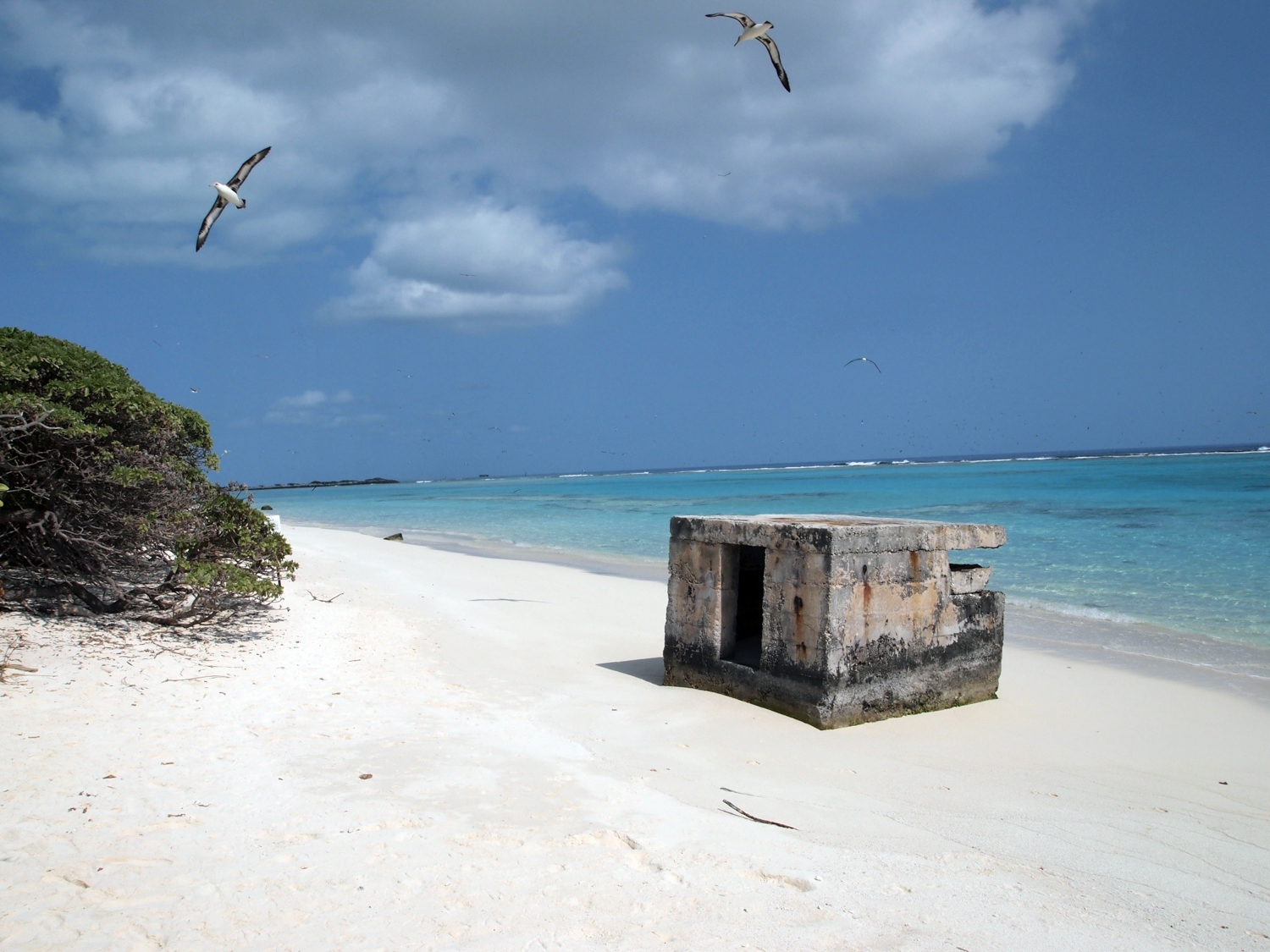
After that, the group went up to the water collection tanks (there are three to support the island, in addition to the natural aquifer) to see a man made lake for the highly endangered Laysan ducks -- there were 7 ducks, but we had to stay 100 feet away. We may get lucky in the next night or two, though, as there appears to be a mating pair that sleeps near Midway House, which is literally a stone’s throw away from Charlie Barracks. Then we went up to Frigate Point, where we saw nesting frigate birds and brown albatross doing mating dancing, getting great photos and videos. Then our cart limos took us up to the West Beach entry path, where there was a munitions bunker and hundreds of albatross with a beautiful white sand beach. The goonies there looked to be the healthiest on the island, likely because the foliage is most like the original native habitat, not overtaken by imported plants and pests. After our lunch, we headed back to the pier to spend the afternoon snorkeling in the COLDEST water I have ever felt. Lots of turtles, jacks, goat fish, a few eels (can I go anywhere without finding those?) and other critters to look up. Nice, but cold. At the end, we saw about 15 turtles on Turtle Beach, and took photos.
Our lecture was on the Hawaiian Monk Seal, also endangered. Like the albatross, the monk seals come here for mating and giving birth. The female, typically quite larger than the male, climbs out of water to give birth to her offspring and to nurse it. The pregnant female monk seal can weigh up to 800 pounds (compared to an adult male at 350), and the majority of the extra weight is to wean the pup. Once weaned, the pup is left on its own as the mother gets ready to go back into estrus (constant pregnancy, yuk). If the pup survives into adulthood, there is the possibility of him/her living for over 50 years, and they keep returning to their birth island annually. Unfortunately, the “weanies” seem to be dying off here at 2-3 years of age, apparently starving to death. There is a 5% population decrease annually up here due to tiger sharks and human disturbances (fishing line, floating nets(, hopefully countered by growth on the main islands. There is a school of thought, though, that thinks they will be extinct in the next 50-60 years. :( This was followed by a presentation from a divemaster from Jack’s Diving Locker in Kona - Pelagic Magic. Wonderful video! Although the thought of hanging at 40 feet of water with a bottom of over 1000 feet is a little intimidating, it looks like it might be worth it.
Side note - let me tell you about the food here. With the closing down of the Navy base and tourism, the old dining facility was abandoned, and the little French restaurant became a buffet where you eat all three meals. The chefs are all from Thailand, and the meals are a mixture of Thai and US dishes. I’m eating up the Thai food for sure, and it’s wonderful.
I may have a chance to give a talk about the Sanctuary Ocean Counts this weekend, we shall see. Loving this trip!